“Near campus” is in every listing, and it means anything from across the road to a twenty-minute bus ride. Worth being specific about what the number actually changes, because below about ten minutes the way you use a shared home is different in kind, not just in degree.
The distances, stated once
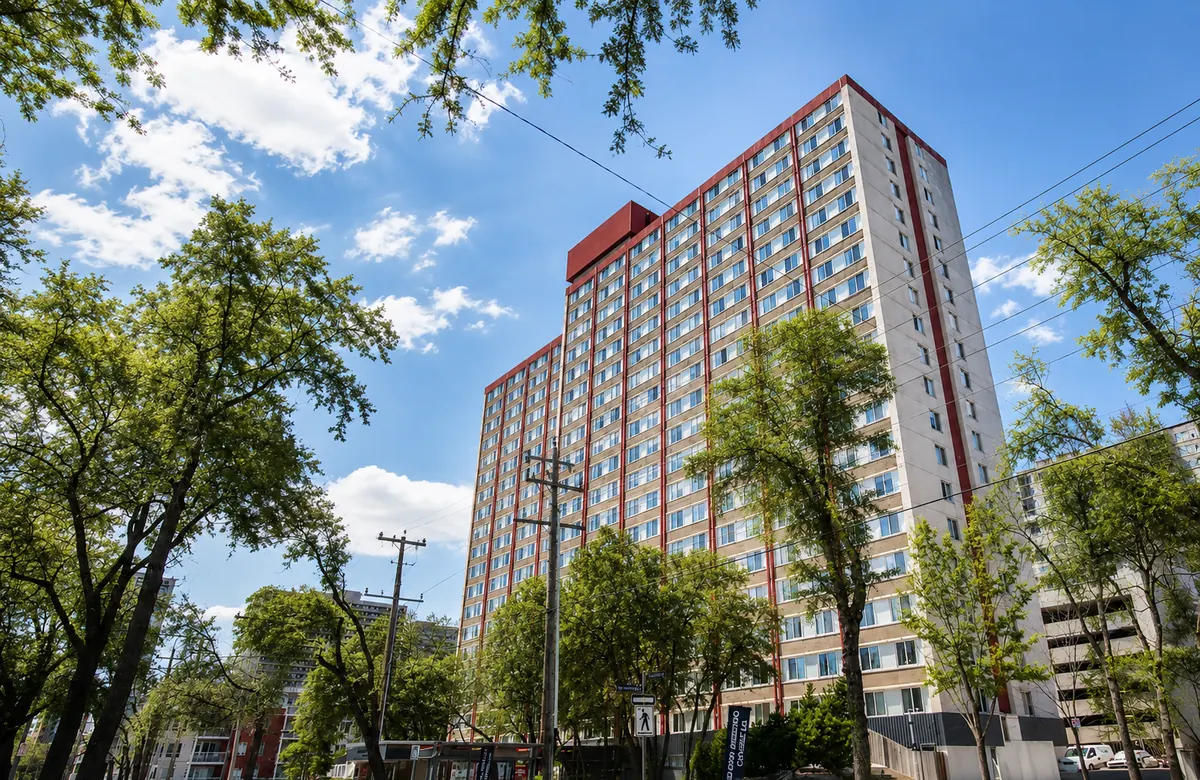
Both buildings are in Garneau, on 85 Avenue. University Tower is on 112 Street, which is the campus boundary. Garneau Towers is a block east on 111 Street.
| University Tower | Garneau Towers | |
|---|---|---|
| U of A Hospital | 4 min | 6 min |
| Education building & Coutts Library | 5 min | 7 min |
| Rutherford Library | 8 min | 9 min |
| Cameron Library | 11 min | 12 min |
| Main Quad | 12 min | 14 min |
Measured along the street grid at eighty metres a minute, rounded up. The full table, with groceries and transit, is here.
What changes below ten minutes
Home becomes a place you return to mid-day. This is the big one. At seven minutes you go back between classes — to eat, to change, to work in a quiet room instead of a crowded one. At thirty minutes you do not, so you carry a bag containing your whole day and you stay out in it.
That single difference is what makes a shared kitchen actually useful rather than theoretical. A kitchen you reach at 6pm after a full day out is a kitchen you use once a day, tired. A kitchen you reach at 12:40 between a morning lecture and an afternoon lab is a kitchen that replaces buying lunch, five days a week.
The library stops being a commitment. Rutherford is eight or nine minutes away. Going back after dinner is a decision, not a round trip you plan at breakfast.
A 9am becomes a 8:45 decision rather than a 7:30 one. Over a term, that is a meaningful amount of sleep.
And in winter it is the whole argument. A seven-minute walk in January is unpleasant. A twenty-minute wait at a bus stop is a reason not to go. The economics of that are here.
Why that suits the shared-suite model specifically
Coliving trades private space for shared space: you get a bedroom, and the kitchen, bathroom and living area belong to four of you. The trade works when the shared parts get used well and the private part is enough for the hours you are in it.
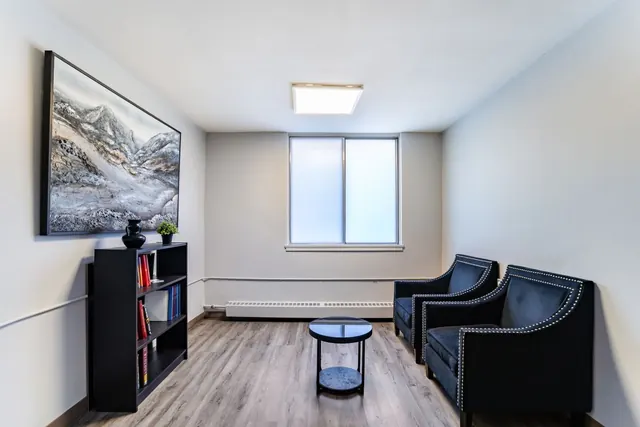
Proximity improves both sides of that trade. The shared kitchen gets used properly because you are physically able to. And the bedroom is enough, because you are not confined to it — campus, two libraries and Whyte Avenue are all walkable, so the room does not have to be a living room as well.
Further out, the same room and the same suite work worse, through no fault of either. That is the honest case for paying for the location rather than the square footage.
For health placements it is the only number
University of Alberta Hospital is four minutes from University Tower and six from Garneau Towers.
For nursing, medicine, pharmacy or rehabilitation placements — shifts that start before transit is useful and end after it stops being pleasant — no other line on any comparison competes with that one.
What proximity costs, plainly
University Tower rooms run $700 to $880 every four weeks; Garneau Towers $560 to $800. The gap between the two buildings is roughly the price of two minutes on every walk — and Garneau Towers has the fitness centre, the two laundry rooms and the lounge, which University Tower does not.
So “closer” and “better equipped” point in opposite directions here. Both buildings are set out here, and the neighbourhood page has the full walking table.
And what it does not change
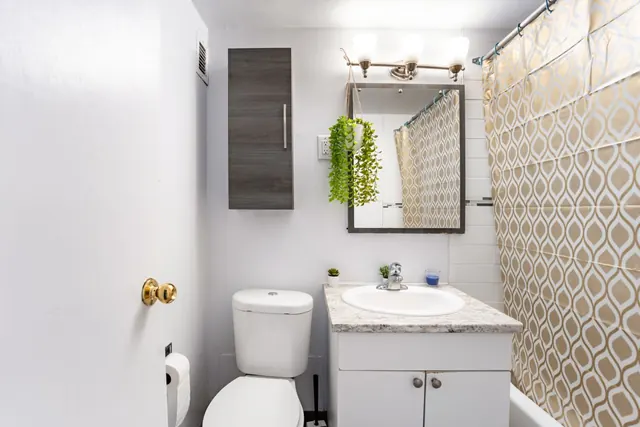
Being close to campus does not change the suite ratio: four bedrooms, one bathroom, one kitchen, in both buildings. It does not create a private bathroom, and it does not alter quiet hours — 11pm to 8am on weeknights, midnight to 9am at weekends, tightening in the December and April exam periods.
If the shared-suite model is wrong for you, proximity will not fix it. Who coliving suits, and who should not choose it.